
Unit 10: Conflict
WRLD 302 - Communicating Across Cultures

about this tutorial...

This is one in a series of tutorials on intercultural communication. Click on "mobile page" at the bottom of the page for alternative views. You may create a print version by clicking on the "print all" link at the top of the page. Note that additional learning resources are linked in the sidebars.

Anticipated completion time for this tutorial (not including reading chapter): approximately 40 minutes. Note that you can stop and come back and your score on completed items will be retained.

Learning Objectives

The objectives below can be achieved through working with the assigned readings, watching the presentations, doing the tutorial exercises, and posting to the discussion forums. Achievement of the objectives will be measured through the score achieved on the exercises (questions can be answered more than once), on the Blackboard quiz for this unit, and on the quality of contributions to the course discussion forums.

conflict.png
By successfully completing this unit, students should be able to...
  • Define intercultural conflict
  • Discuss Kim's model of intercultural conflict and its 3 levels
  • Explain the concept of "face"
  • Define facework and identify facework strategies
  • List and define different styles of conflict communication
  • Identify conflict styles used by individualistic & collectivistic cultures
  • Identify conflict styles preferred by high- versus low-context cultures

Resources for this unit

UNIT OPENER: News clip - Staying true to your culture

This clip is taken from a post-game interview with the Italian coach of an English soccer team. He had been sent off to the stands after arguing with the referee.

First, watch the video (about 1 minute long) below:

=> YouTube version


After watching the video, think about the following:

  1. What contrast is evident in the two cultures represented here?

  2. What communication style is used by the coach, Paolo di Canio?

  3. What is the conflict involving the coach?

  4. What's the result of the conflict?

  5. Why is di Canio not going to change his behavior?


Now, turn to the next page for comments.

UNIT OPENER: Comments and Analysis

1. What contrast is evident in the two cultures represented here?dicanio_body.jpg
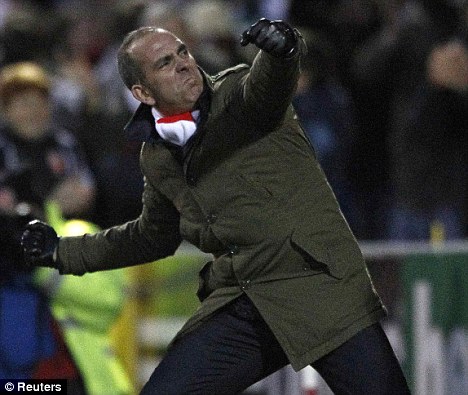
The Italian coach is very vivacious, loquacious and emotional. He clearly contrasts dramatically with the more reserved and low-key character of the English. With two such different cultures, it is not surprising that misunderstandings can arise. Just as there are styles in verbal and non-verbal communication, there are also styles in conflict resolution. In England a "discussion" or "integrating" style is favored in which the reasons for conflict are addressed directly but emotions are restrained. Italians tend to use an emotionally expressive style.

2. What communication style is used by the coach, Paolo di Canio?

The Italian coach speaks fast and uses gestures. His face is quite expressive as well. In terms of communication style, it is direct and elaborate (highly expressive, even exaggerated language). He tends to raise his voice often and uses a lot of repetition. This is typical of a dynamic communication style which tends to treat conflicts as high drama. This is far removed from the customary English communication style, famous for its understatement and humor.

3. What is the conflict involving the coach?
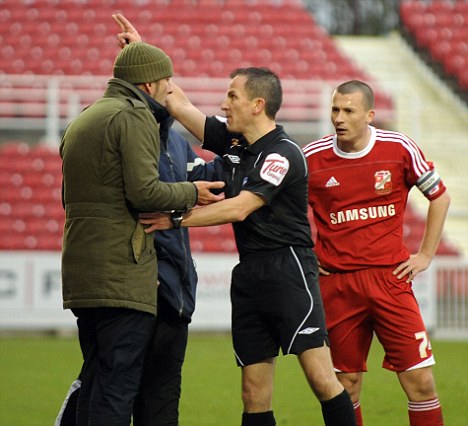
dicanio_ejected.jpg As is often the case with sports coaches, di Canio has disagreements with the refereeing. In this particular case, he protested a call he thinks the referee missed and was ejected from the game. That was in part due to his leaving the "technical area" (coach's box) and being too demonstrative in his protest. Disagreeing is allowed in an English sports context but the disagreement needs to be expressed in a form consistent with English norms of behavior and communication. The fact that di Canio has been ejected repeatedly from games suggests his behavior and communication style are unacceptable from a British perspective.

4. To what extent is the conflict cultural?

The verbal style and body language used by di Canio are a large part of what causes the conflict. It's not just that he uses emblems (hand gestures) and illustrators (gestures accompanying speech), but as he puts "I talk with my body language sometimes". That includes, as seen in the clip, kicking one of his players in frustration. Such behavior is by no means limited to Italians, but in an English context, it is likely to be seen as beyond the pale.

5. Why is di Canio not going to change his behavior?dicanio_salute.jpg
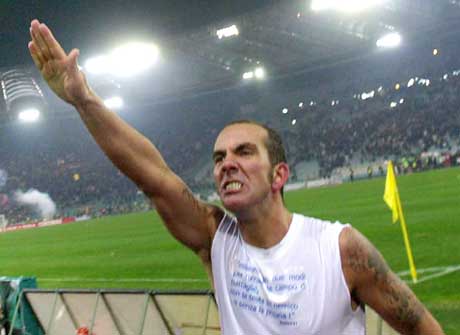
He says at the outset, "I have a culture and I don't stop my culture". His communication style is not something he is willing or able to change as it is part of his cultural identity that it is important for him to maintain. Di Canio has been a controversial figure in soccer going back to his player days. His "expressiveness" got him penalized multiple times as a player, as well as later as a coach. As a player in Italy he was also criticized for his tattoos (one in tribute to Mussolini) and his use of the Italian fascist salute.

What's the point of this unit's opener?

Cultures and individuals differ in how they deal with conflict. In this chapter we will be looking at different reasons why interpersonal and intercultural conflict arises and ways to manage it. England and Italy are both countries whose cultures tile towards individualism. In communication and conflict resolution, they tend to be direct, addressing issues frankly and fully. At the same time, the two countries have different traditions of politeness and etiquette, which can have an impact on speech, non-verbal communication and conflict resolution. A substantial contrast is in emotional expressiveness. Not all cultures have the tendency to deal directly with conflict. Asian cultures, for example, favor an "obliging" style for managing conflict in which one not only maintain's self-respect and dignity (or "self-face") but also that of the other party ("other-face"). Sometimes an even more oblique "avoiding" style is used, which tries to preserve harmony by ignoring conflict altogether.

PRESENTATION

NOTE: You should have read chapter 10 in the textbook before watching the presentation.

=> YouTube version

EXERCISES


 Q2: Facework


Further Resources

For preparing for the on-line quizzes on this material, the publisher Web site can be helpful. It includes a Web quiz in multiple choice format that would be good practice for our on-line quiz. If you take the practice quiz from the publisher, you don't need to send the results to me (you can email them to yourself instead)

Key Terms

  • avoiding conflict style: Ignoring both self-face and other-face
  • compromising conflict style: Trying to balance both self-face and other-face
  • dominating conflict style: Favoring self-face to the exclusion of other-face
  • face: Favorable social impression that a person wants others to have of him or her
  • face negotiation theory: Theory first postulated by Stella Ting-Toomey to explain how different cultures manage conflict
  • facework: Behaviors or messages (verbal or non-verbal) that maintain, restore, or save face
  • integrating conflict style: Assuming high self-face need while also attending to the needs of other-face
  • mutual-face: Respect and dignity of the group as a whole (primary interest in collectivistic cultures)
  • obliging conflict style: Putting other-face need ahead of self-face
  • other-face: Paying attention to the needs and desires of the other party in a conflict
  • self-face: Seeking one's own interest during conflict (primary interest in individualistic cultures)

feedback on this tutorial...